IRMAA: The Medicare Surcharge That Catches Retirees Off Guard
“A penny saved is a penny earned.”
-Ben Franklin
Most people know Medicare isn’t free. What they don’t know is that it can get a lot more expensive if your income is too high.
It’s called IRMAA — the Income-Related Monthly Adjustment Amount. It’s a surcharge on top of your regular Medicare premiums. And it surprises a lot of retirees.
Here’s how it works and what you can do about it.
What Is IRMAA?
Every fall, Medicare sets a “base” premium for Part B (medical insurance) and Part D (prescription drugs). For 2026, the standard Part B premium is $202.90 per month.
But that’s not what everyone pays.
If your income is above a certain threshold, Medicare adds a surcharge — IRMAA — to your premium. The higher your income, the higher the surcharge.
And here’s the part that trips people up: Medicare doesn’t look at this year’s income. They look at your tax return from two years ago. So your 2026 premiums are based on your 2024 income.
The 2026 IRMAA Brackets
For individuals filing single, here’s what you’ll pay for Part B in 2026:
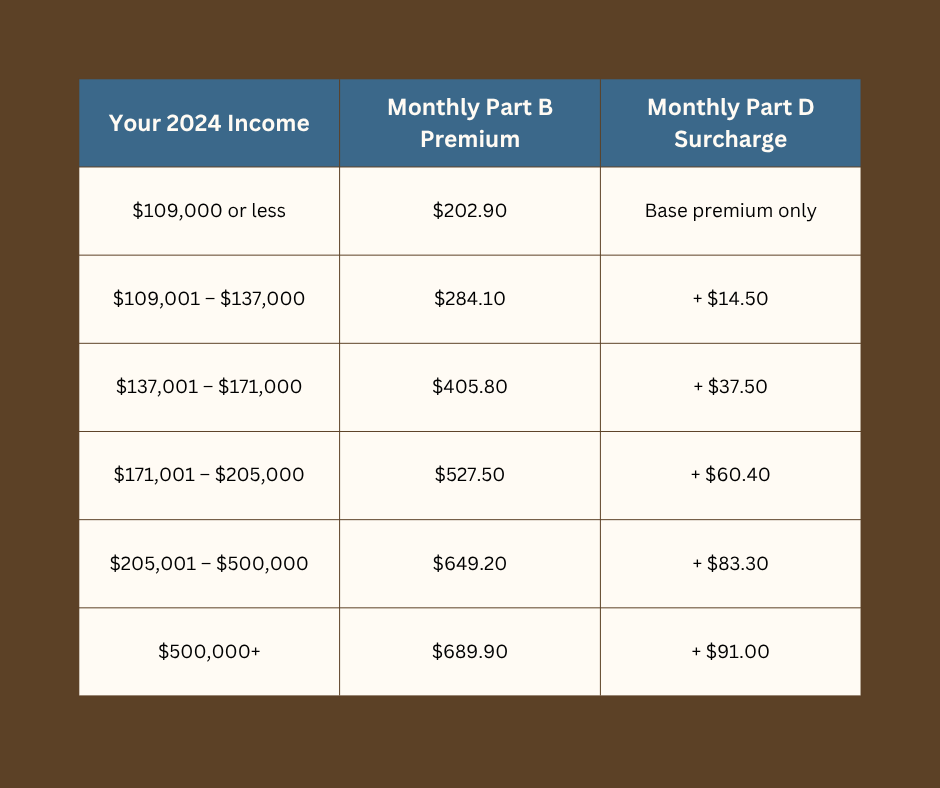
For married couples filing jointly, double those income thresholds. So the first IRMAA bracket kicks in at $218,001.
At the highest bracket, you’re paying nearly $700 per month for Part B alone — more than three times the base premium. For a couple, that’s almost $17,000 per year just in Medicare premiums.
Why This Catches Retirees Off Guard
IRMAA hits hardest in a few common scenarios.
Large required minimum distributions. If you’ve built up a sizable IRA, your RMDs can push you into higher IRMAA brackets. A $2 million IRA at age 75 might require distributions of $80,000 or more — on top of Social Security and any other income.
One-time income spikes. Sell a rental property? Cash out stock options? Do a large Roth conversion? That income shows up on your tax return — and two years later, your Medicare premiums go up.
Business owners with pass-through income. Even if you’re not actively working, income from an S-corp, partnership, or LLC flows through to your personal return. Medicare doesn’t care that you’re retired. They just see the income.
The Two-Year Lag
This is the part that frustrates people most.
Your 2026 premiums are based on your 2024 income. So, if your income spiked in 2024, you won’t feel the impact until 2026. By then, you might have forgotten all about it.
The good news? It resets every year. If your income drops, your premiums will eventually follow — with that same two-year lag.
What You Can Do About It
You can’t avoid IRMAA entirely if you have high income. But you can plan around it.
Real financial planning for real life.
Riverbend is a fee-only, fiduciary advisor. Our plans are personal, shaped by your values and designed to help you build a full life.
Who We AreStart IRA withdrawals early. If you have a large traditional IRA, consider taking distributions before age 73. This reduces your future RMDs — and keeps your income from spiking later.
Spread out Roth conversions. Instead of converting a large amount in one year, spread conversions over multiple years to stay below IRMAA thresholds.
Time your income strategically. If you’re planning to sell a business, property, or concentrated stock position, think about the timing. A sale in 2024 affects your 2026 premiums.
Know the thresholds. Sometimes a small reduction in income can drop you into a lower bracket and save thousands in premiums.
You Can Appeal
If you’ve had a “life-changing event,” you can request that Medicare use a more recent year’s income instead of the two-year lookback.
Qualifying events include:
- Retirement or reduction in work hours
- Death of a spouse
- Divorce or annulment
- Loss of pension income
You have 60 days from receiving your premium notice to file an appeal. Don’t wait.
The Bottom Line
IRMAA is one of those things nobody tells you about until it’s too late. By then, you’re stuck paying inflated premiums for a year or more.
The key is planning ahead. Know your income. Know the thresholds. And think about how today’s decisions will affect your Medicare costs two years from now.


