Estate Planning Strategies: A Visual Guide

Estate planning can get confusing fast. That’s why we put together these diagrams.
Each one explains a different strategy — what it is, how it works, and why it might matter for your situation.
The 2026 Estate Tax Change
The federal estate tax exemption is how much you can pass to heirs without paying estate tax. Anything above that amount gets taxed at 40%.
Right now, the exemption is $15 million per person -$30 million for a married couple.
If your estate is above that threshold, planning now could save your family a significant amount in taxes.
Annual Gifting
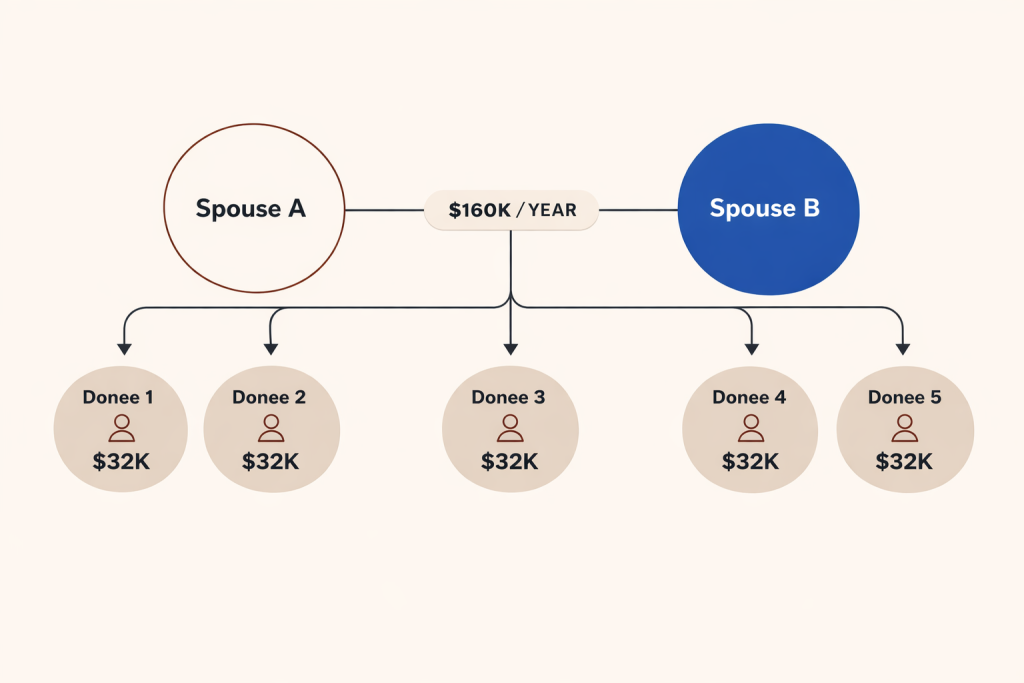
Every year, you can give up to $19,000 per recipient without triggering any gift tax or using any of your lifetime exemption. If you’re married, you and your spouse can combine gifts — that’s $38,000 per recipient, per year.
A married couple with five children can transfer $190,000 per year — completely tax-free. Do that for ten years and you’ve moved nearly $2 million out of your taxable estate.
Annual gifts don’t count against your lifetime exemption. And if the assets you gift continue to grow, that growth happens outside your estate too.
Spousal Lifetime Access Trust (SLAT)
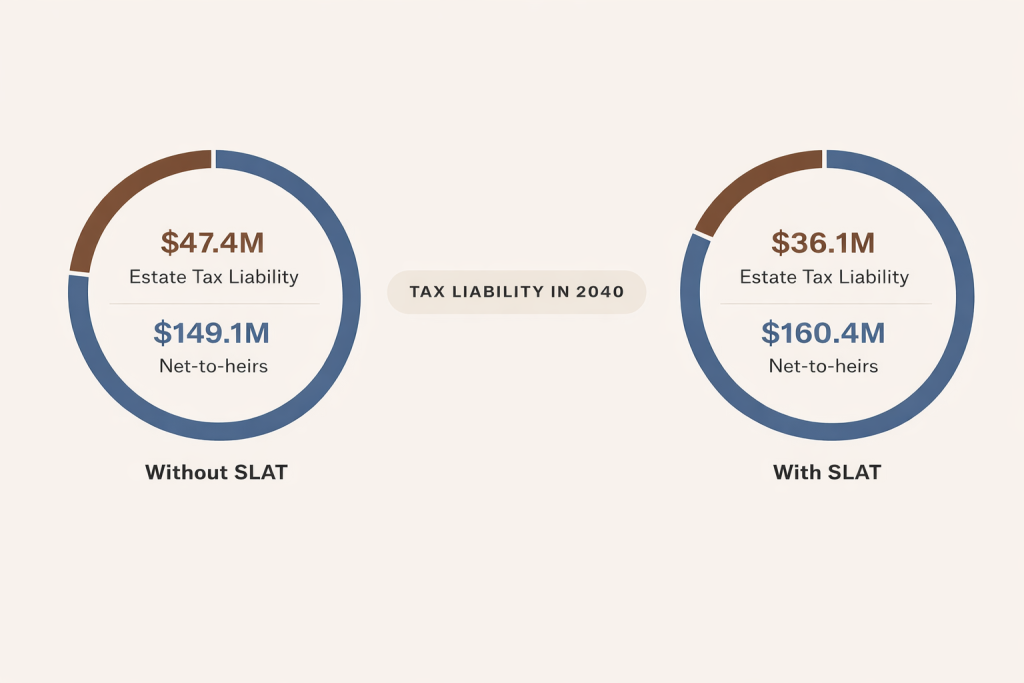
A SLAT lets you move assets out of your estate while still keeping them accessible to your spouse.
One spouse gifts assets to an irrevocable trust for the benefit of the other spouse. The assets are now out of the donor’s estate — but the beneficiary spouse can still access them if needed.
This lets you use your current $15 million exemption. Once it’s in the trust, it’s protected — even if the rules change.
Irrevocable Life Insurance Trust (ILIT)
Most people don’t realize that life insurance death benefits can be subject to estate tax.
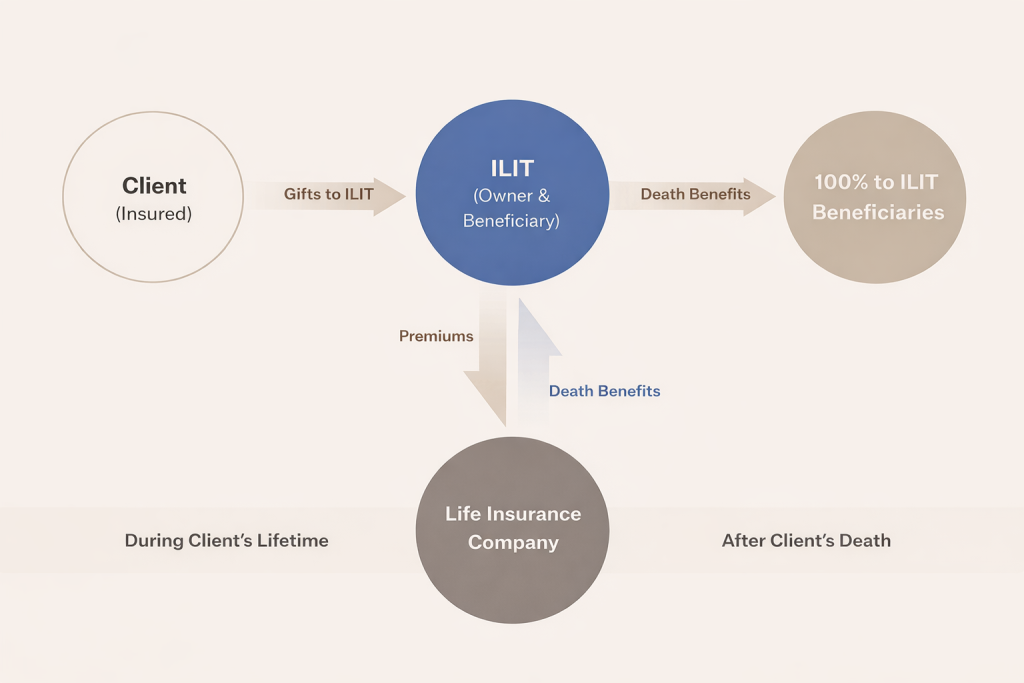
If you own a policy on your own life and your estate is above the exemption amount, the death benefit gets added to your taxable estate. A $5 million policy could trigger $2 million in estate tax.
When life insurance is owned by an irrevocable trust instead of you personally, the death benefit stays out of your estate. Your beneficiaries get the full amount — tax-free.
ILITs can also provide liquidity. If your estate owes taxes, the trust can use the insurance proceeds to cover the bill without forcing your heirs to sell assets.
Grantor Retained Annuity Trust (GRAT)
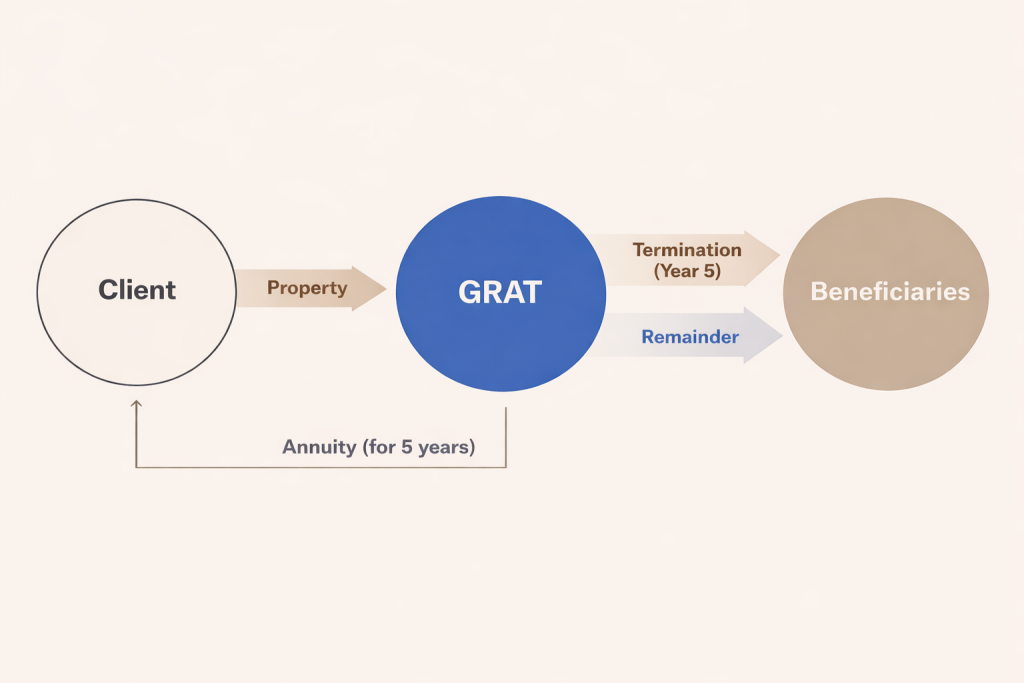
A GRAT is designed to transfer appreciation out of your estate without using your exemption.
You transfer assets into an irrevocable trust and receive annuity payments back over a set term. If the assets grow faster than the IRS assumed rate, the excess passes to your beneficiaries tax-free.
A properly structured GRAT can have a gift value of essentially zero. No gift tax. No exemption used. But if the assets perform well, your heirs still benefit.
Donor Advised Fund (DAF)
A donor advised fund is an investment account dedicated to charitable giving.
You contribute assets, take an immediate tax deduction, and then recommend grants to charities over time — on your schedule. You don’t have to decide which charities to support when you make the contribution.
You can fund a DAF with appreciated stock, which avoids capital gains entirely. It’s simpler than a private foundation — no board to manage, no annual filings.
Real financial planning for real life.
Riverbend is a fee-only, fiduciary advisor. Our plans are personal, shaped by your values and designed to help you build a full life.
Who We Are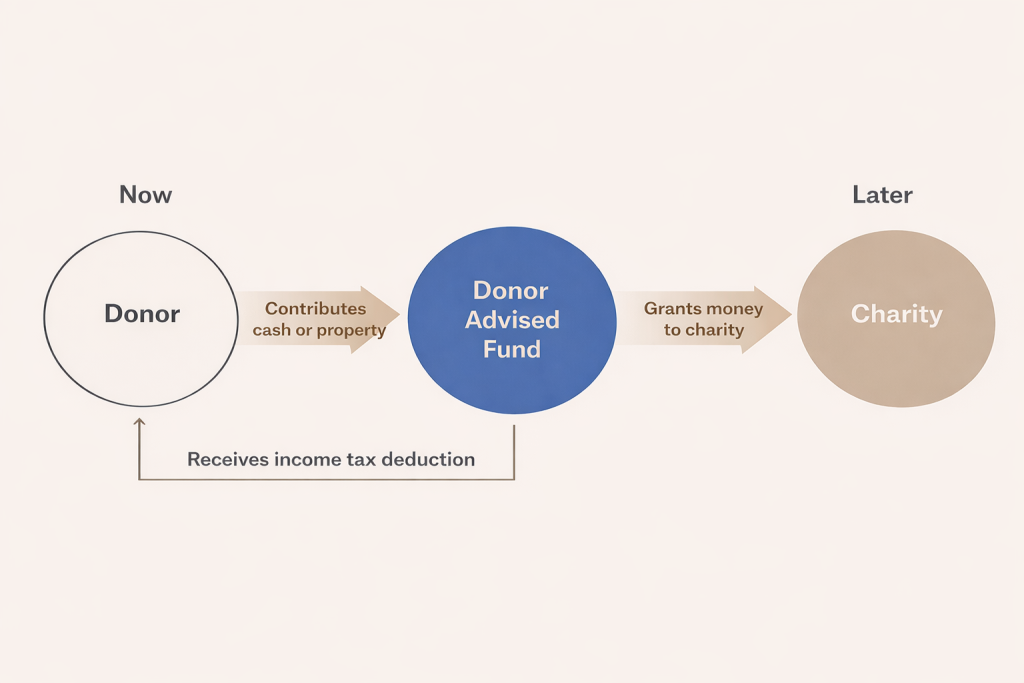
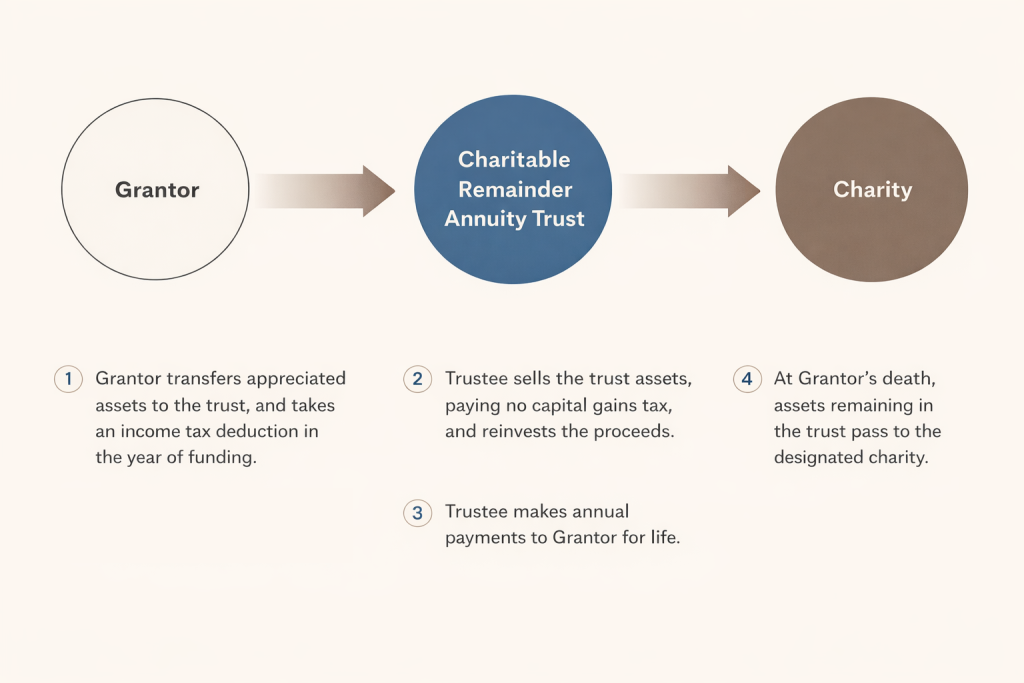
Charitable Remainder Trust (CRT)
A CRT is a “split-interest” trust. Part goes to you. Part goes to charity.
You transfer assets into an irrevocable trust. The trust pays you an income stream for a set period or for your lifetime. When the term ends, whatever remains goes to charity.
You get an income tax deduction upfront. The trust itself doesn’t pay tax on investment gains. And the assets are removed from your estate.
This is especially useful for highly appreciated assets. Instead of selling and paying a large capital gains tax, you transfer the asset to a CRT, let the trust sell it tax-free, and receive income from the full value.
Dynasty Trust
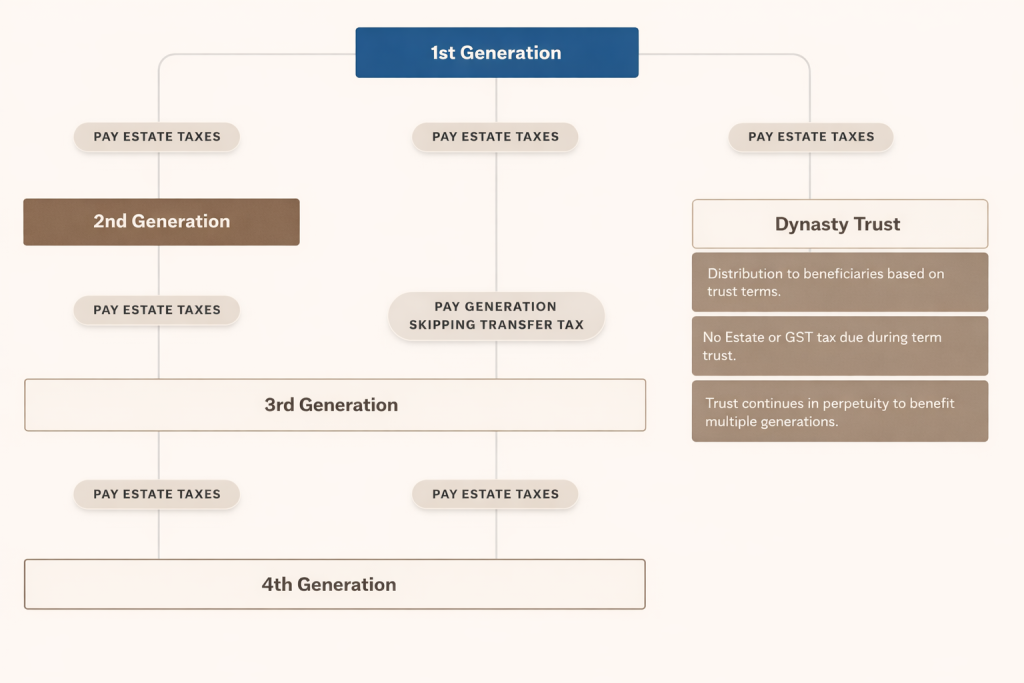
Most trusts eventually terminate and distribute assets to beneficiaries. A dynasty trust is designed to last — potentially forever.
Once assets are inside the trust, they stay there. They benefit multiple generations — children, grandchildren, great-grandchildren — but they never become part of anyone’s taxable estate.
Normally, wealth gets taxed every time it passes from one generation to the next. A dynasty trust can break that cycle.
Valuation Discounts
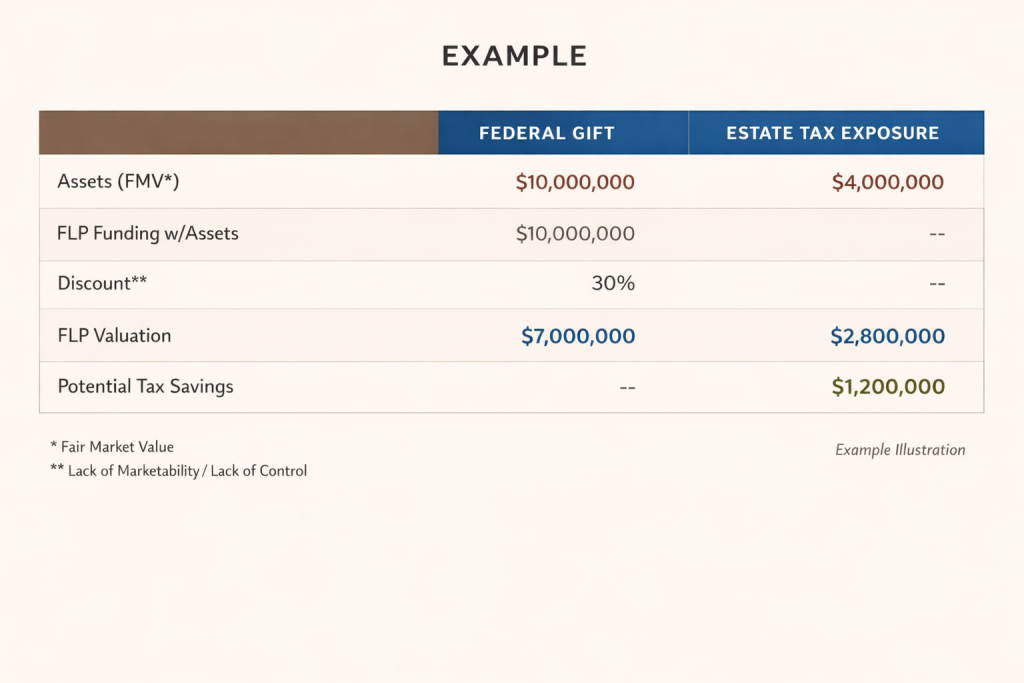
When you transfer an asset, the value for tax purposes is what matters. Sometimes, the way you own an asset can reduce that value — legally.
If you own $10 million in real estate personally and transfer it, the IRS values it at $10 million. But if you own that same real estate through a Family Limited Partnership or LLC, and you transfer a minority interest in the entity, the value may be discounted.
A minority interest in a private entity is harder to sell. There’s no public market. The buyer has limited control. These factors justify a discount — often 20% to 40%.
The Bottom Line
These strategies aren’t for everyone. But for families with significant assets, the stakes are high. A 40% tax on everything above the exemption can dramatically reduce what you leave to your heirs.
The good news? There are tools available. The key is understanding them — and acting before opportunities pass.


